Total Loss vs Repair: Should You Fix or Sell Your Car?
After an accident, one of the biggest questions drivers face is whether their vehicle is worth repairing—or if it’s headed toward total loss status. Insurance companies rely on formulas and estimates to make this decision, but those calculations don’t always align with what’s best for the vehicle owner.
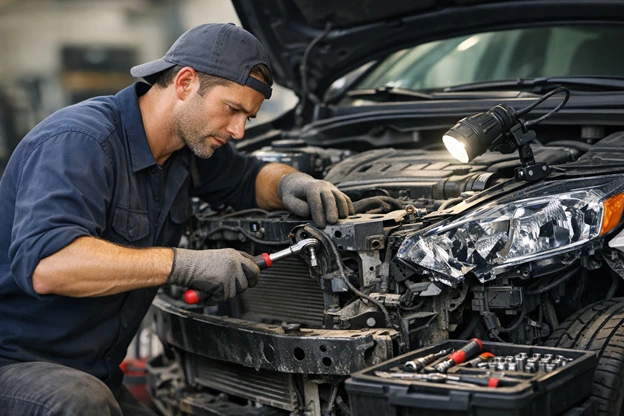
Understanding how insurance companies determine whether a vehicle is a total loss car, how insurance repair estimates are calculated and when repair costs outweigh the benefits can help you make a more informed decision. If you’re unsure if insurance payments to repair your vehicle is right for you, Cash for Cars can help with a cash offer within 24 hours and we can provide you with a free repair estimate for your vehicle as well, all within a simple click. We provide your cash offer and repair estimate, giving you clear data points to help you make a choice. All you need to do is take about 30 seconds to enter license plate or vin numbers and your zip code. We’ll get you a cash offer and repair estimate in less than a minute.
What Is a Total Loss Car?
A total loss car is a vehicle an insurance company decides is not economically reasonable to repair. This happens when the cost of repairs plus related expenses approaches or exceeds the vehicle’s actual cash value (ACV).
Most insurers declare a total loss when:
- Repair costs reach 70%–80% of the vehicle’s ACV
- Structural or frame damage is involved
- Airbags deploy in an older or high-mileage vehicle
- Safety systems are compromised
The exact threshold varies by state and insurance provider, but the goal is the same: minimizing payout costs—not maximizing your vehicle’s long-term value.
Repair vs Total Loss: How Insurance Decides
When evaluating repair vs total loss, insurance companies rely on an insurance repair estimate generated by an adjuster or partner body shop. This estimate often differs from what independent repair shops quote.
Insurance estimates may:
- Use lower labor rates
- Favor aftermarket or recycled parts
- Exclude potential hidden damage
- Assume minimal repair time
If the estimate falls just under the total loss threshold, insurers may choose to repair—even if the vehicle’s resale value and reliability are significantly reduced afterward.
When Repairing May Not Be Worth It
Even if your insurer approves repairs, that doesn’t mean fixing the car is the best financial move.
Situations where repairs often don’t make sense:
- The car will have a diminished value after repair
- Repairs take weeks, increasing rental costs
- You’re responsible for deductibles and uncovered expenses
- The vehicle has prior accident history
- Resale value drops significantly post-repair
A repaired car with an accident history can lose 20%–40% of its market value, making it harder to sell or trade in later—even if the repairs are done professionally. Cash for Cars doesn’t require repairs and is prepared to offer you a good price for your vehicle whether it drives, has cosmetic issues or isn’t fully operational. If you do want to see what those repair costs might be, you can use our free repair estimate tool to get an idea of what those costs may be.
What Happens When Insurance Underpays
Insurance payouts are based on actual cash value, not replacement cost. That means depreciation, mileage, and prior wear all reduce what you receive—even if the car was well maintained.
Common issues when insurers underpay:
- Low ACV valuations
- Disagreements over comparable vehicles
- Reduced payouts due to minor prior damage
- Repair estimates that don’t reflect real-world costs
When the settlement doesn’t cover meaningful repairs—or leaves you paying out of pocket—many owners feel stuck between fixing a car they don’t want or accepting a payout that falls short.
Selling as an Alternative to Repair
When faced with the repair vs total loss decision, selling the vehicle as-is can be a practical alternative—especially when insurance numbers don’t work in your favor.
Benefits of selling instead of repairing:
- No out-of-pocket repair expenses
- No waiting on insurance approvals
- No rental car or repair delays
- Avoid long-term value loss from accident history
For many owners, selling provides a clean break and immediate certainty—without fighting insurance adjusters or committing to costly repairs.
Making the Right Decision
The choice between repairing a car or accepting total loss status isn’t just about what insurance approves—it’s about what makes financial sense for you. Insurance repair estimates are designed to control costs, not preserve vehicle value.
When the numbers don’t add up, exploring alternatives can help you move forward with less stress and fewer surprises.
If repairs aren’t worth the time or money, selling your car as-is may be the smarter option. At Cash for Cars, we would be happy to give you an estimate with no charge or obligation of what your vehicle is worth as-is. Our estimate provides you with an idea of what you could get with no hassle vs some of the repair costs and time that go into a vehicle. It only takes 30 seconds and the click of a button to get an offer from us.


